
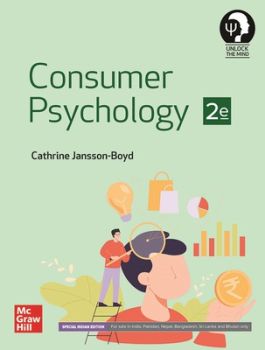
Consumer Psychology
2nd Edition
9364447921
·
9789364447928
© 2026 | Published: April 9, 2026
About the Book:This book is a comprehensive textbook on Consumer Psychology that explains how and why consumers think, feel, and behave in the marketplace. This second edition includes updated research, new examples from different countries, and the …
Read More
Chapter 1 Consumer Psychology: What it is and How It Emerged
Chapter 2 Consumer Memory and Learning
Chapter 3 Perception and Attention
Chapter 4 Identity and Consumption
Chapter 5 The Emotional Consumer
Chapter 6 Attitudes
Chapter 7 Advertising Psychology
Chapter 8 Motivational Determinants of Consumer Behaviour
Chapter 9 Consumer Decision-Making and Brand Loyalty
Chapter 10 The Internet
Chapter 11 Children as Consumers
Chapter 12 Consumption and Happiness
Chapter 13 Consumers and the Environment
Author Index
Subject Index
Chapter 2 Consumer Memory and Learning
Chapter 3 Perception and Attention
Chapter 4 Identity and Consumption
Chapter 5 The Emotional Consumer
Chapter 6 Attitudes
Chapter 7 Advertising Psychology
Chapter 8 Motivational Determinants of Consumer Behaviour
Chapter 9 Consumer Decision-Making and Brand Loyalty
Chapter 10 The Internet
Chapter 11 Children as Consumers
Chapter 12 Consumption and Happiness
Chapter 13 Consumers and the Environment
Author Index
Subject Index
About the Book:
This book is a comprehensive textbook on Consumer Psychology that explains how and why consumers think, feel, and behave in the marketplace. This second edition includes updated research, new examples from different countries, and the addition of neuroscience-based studies, reflecting growing interest in consumer neuroscience. It focuses more on the psychological aspects of consumer behaviour rather than just marketing, while still incorporating relevant marketing research. The book is designed to suit a wide range of learners and covers the most common topics taught globally in Consumer Psychology courses. The text is organized into thirteen chapters, each dealing with key topics such as memory, perception, identity, emotions, attitudes, advertising, motivation, decision-making, online behaviour, children as consumers, happiness, and environmental issues. Each chapter includes key concepts, summaries, and exercises to encourage understanding and discussion. Overall, the book provides a balanced and structured introduction to both traditional theories and modern developments in Consumer Psychology, making it useful for students and researchers interested in understanding consumer behaviour.
Key Features:
• Aligned with the latest curriculum guidelines
• Explains core psychological concepts through consumer-focused examples
• Connects theory to real-world consumption and decision-making
• Relevant for students of psychology, marketing, business, and sociology
This book is a comprehensive textbook on Consumer Psychology that explains how and why consumers think, feel, and behave in the marketplace. This second edition includes updated research, new examples from different countries, and the addition of neuroscience-based studies, reflecting growing interest in consumer neuroscience. It focuses more on the psychological aspects of consumer behaviour rather than just marketing, while still incorporating relevant marketing research. The book is designed to suit a wide range of learners and covers the most common topics taught globally in Consumer Psychology courses. The text is organized into thirteen chapters, each dealing with key topics such as memory, perception, identity, emotions, attitudes, advertising, motivation, decision-making, online behaviour, children as consumers, happiness, and environmental issues. Each chapter includes key concepts, summaries, and exercises to encourage understanding and discussion. Overall, the book provides a balanced and structured introduction to both traditional theories and modern developments in Consumer Psychology, making it useful for students and researchers interested in understanding consumer behaviour.
Key Features:
• Aligned with the latest curriculum guidelines
• Explains core psychological concepts through consumer-focused examples
• Connects theory to real-world consumption and decision-making
• Relevant for students of psychology, marketing, business, and sociology